We took a Malaysia road trip beyond Kuala Lumpur. We found generous strangers, unexpected favourites and rather more traffic cones than we’d bargained for.
Malaysia and I are old friends.
I’ve lost count of my trips to Kuala Lumpur and Putrajaya. I know KL’s roar and Putrajaya’s grand, unhurried calm. And I’ve been hooked on Malaysian food for years.
But two cities don’t make a country.
So, in September, Karen and I picked up a hire car for a Malaysia road trip and pointed it east.
Cherating first, then Kuala Terengganu and Kuantan on the South China Sea coast. Then the long journey south to historic Malacca, and back to Putrajaya to be near the airport.
We spent hours surfing YouTube for ideas. We pictured beach towns, smoky street food and the freedom to wander at our own pace. On paper, we’d planned the journey rather well. Malaysia had other ideas.
We hadn’t anticipated any roadworks.
The Great Malaysian Roadworks Tour
Our first surprise came before we’d even escaped the Klang Valley.
To reach the east coast, the road first runs north towards KL. Only then does it swing east across the peninsula. Nobody had warned us. Clearly, I hadn’t studied the map. My navigator was fast asleep!
This was no breezy coastal cruise. It was a long cross-country haul through the interior, past mile after mile of palm-oil plantations.
Then the roadworks arrived. Endless, relentless roadworks.
Every time we built up speed, another construction zone loomed. Lanes vanished, traffic crawled and our road trip became a tedious, stop-start procession. We got to know Malaysia’s traffic cones intimately.
In fairness, the roads were good whenever the traffic moved. Roadside cafés and petrol stations were never far away, ready with cold drinks and hot food.
Later, between Cherating and Kuala Terengganu, a diversion pushed us inland. It took us away from the sea we’d come all this way to see. Perhaps we missed a stunning coastal drive. We’ll never know.
Our grand coastal adventure featured more roadworks than coastline.
Cherating: A Lazy Village by the Sea
I arrived in Cherating feeling unwell, and it coloured everything.
Cherating is tiny. It’s a lazy little village on the South China Sea. It moves at its own sweet pace and makes no apology for it.
It’s predominantly Muslim, so a cold beer takes some finding. My sundowner was a lime soda. I survived.
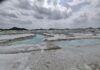
The enormous beach, in September, was almost empty. At low tide, the sea retreats to reveal sandbars, shallow pools and a lone hut on stilts.
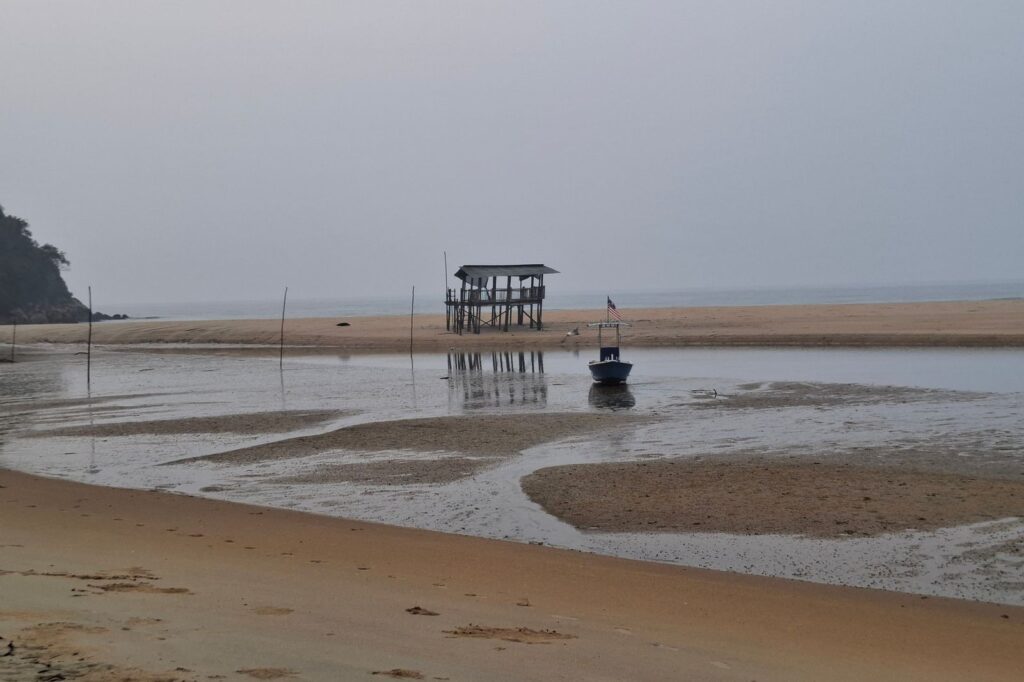
A soft haze hung over everything, turning the morning light silvery. Karen wandered across the sand with barely another soul in sight.
Under the casuarina trees, racks of colourful surfboards stood waiting. Cherating becomes a surfing hotspot when the monsoon swells roll in later in the year. In September, the sea was flat calm. The only warning sign was for jellyfish.
The food was all about simple pleasures. Red plastic chairs on the sand. Fresh coconuts with straws jammed straight in. Golden battered fish with a dark dipping sauce. Another day, I tucked into a chicken and rice dish. Cutlery was scarce, so I ate with my hands, just as I’ve often done in India. It was delicious. Nasi lemak, sadly, was off the menu.
Mangroves, Fireflies and Batik
The mangrove tour was the surprise hit. We slid along a tea-brown river, roots twisting down into the water on both banks. We spotted monkeys in the canopy and a snake stretched along a branch, perfectly camouflaged.
The firefly cruise was another story. Karen loved it. So did a boatload of excited passengers, oohing at every flicker in the trees. I found it mind-numbingly tedious. I couldn’t wait for it to finish.
The batik studio made up for it. It was a cheerful jumble of dye pots, brushes and brightly patterned cloth. Bold tropical flowers bloomed across the panels in electric blue, purple and fiery red.
Karen’s panel came out beautifully, and it came home with us. I picked up a brush too, though I’ll happily let Karen take the credit.
Cherating never set my pulse racing. Karen enjoyed it far more than I did. Looking back, she may have had the right idea.
Kuala Terengganu: Glass Floors, Cold Beer and a Soaking
“Selamat Datang ke Kuala Terengganu”, announced a giant sign on a green hillside.
Welcome indeed.
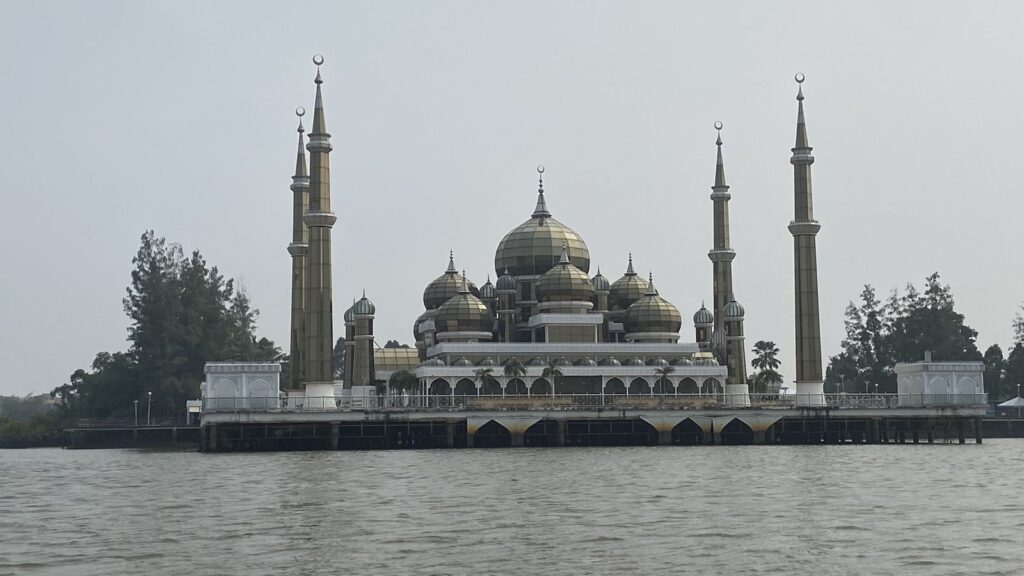
You can’t miss the Crystal Mosque. Its glass and steel domes glitter beside the river, flanked by slender minarets. Inside, it’s cool, white and calm, with light pouring down through the domes. Karen slipped into a robe and headscarf to go inside.
The city’s showpiece is its drawbridge, Southeast Asia’s first. Four tall white towers stand guard over the mouth of the Terengganu River. Their design was inspired by London’s Tower Bridge.
High above the traffic, a sky bridge links the towers. Part of its floor is glass. With blue covers over our shoes, we could peer straight down to the river far below.
Karen took one look and kept to the solid floor. I strode boldly across the glass. For once, I’d been brave.
For once, I’d also strapped a shiny new camera to my rucksack to capture the moment. It recorded absolutely nothing. You’ll just have to take my word for it.
Next came a river cruise, bouncing across the wake in a little blue-canopied boat. We passed brightly painted fishing trawlers, murals on the bridge pillars and the drawbridge from below. Then the Crystal Mosque rose from the water, as if floating on the river.
Chinatown, Cold Beer and a Downpour
Alcohol in KT is largely confined to the hotels and Chinatown. So Chinatown it was.
It was worth the trip. A red gateway leads into streets of faded yellow shophouses and shady arcades. The Chinese temple glows with red lanterns and gold. Down narrow alleys, lanterns light up murals of turtles, divers and a bright red phone box. It was our first taste of the east coast’s street art. It wouldn’t be our last.
Then came the beer. Karen raised a cold one beneath a glowing Guinness sign. Later, a couple of Tigers appeared on the table. After dry Cherating, they tasted like victory.
One night we headed to the night market. Stalls blazed with light and satay smoked over the coals. We were halfway through ours when the sky opened. Rain fell in sheets, hammering the awnings and flooding the street. We abandoned our satay and ran for cover.
Kuantan: One Night Was Never Enough
Kuantan was our last stop on the east coast. We gave it one night. A mistake, as it turned out. We arrived at lunchtime to find our hotel room wasn’t ready. That’s not always a bad thing. So we headed straight out.
First stop was Menara Kuantan 188. The views stretched across the city and river to the hazy hills beyond.
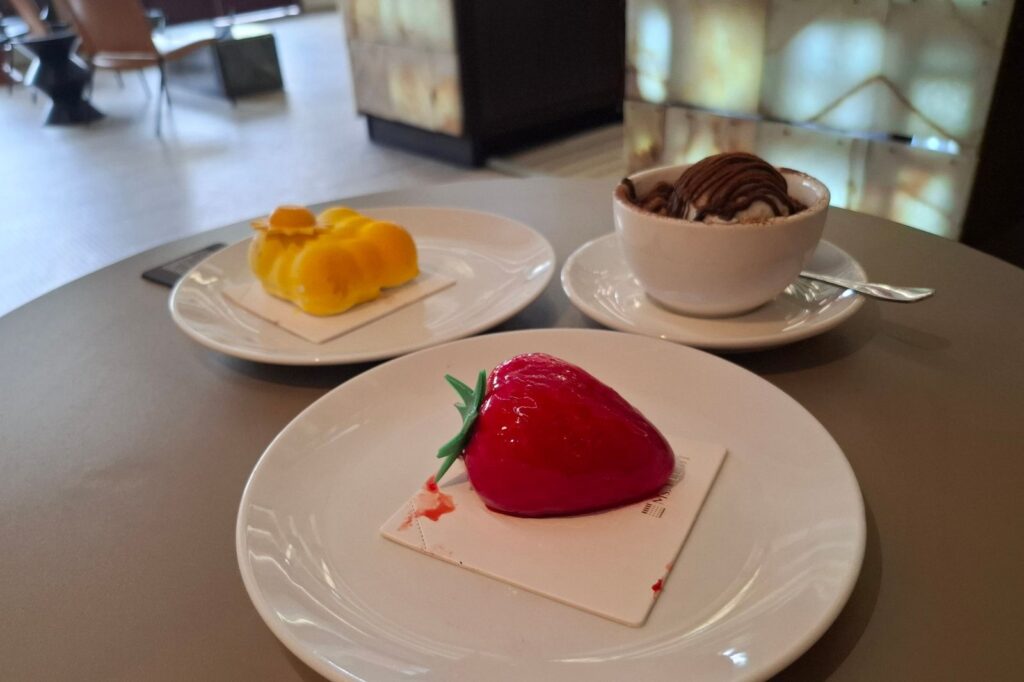
Then it was back down to earth at Ms Elliot at Hock Bee. The café sits in the beautifully restored Hock Bee Brothers Building. Its dessert cabinet looks more like a jeweller’s window than a cake counter.
Karen chose a cake made to look exactly like a strawberry. Mine was a passion fruit cake shaped like a sunshine-yellow flower.
From there, we almost stumbled straight into Art Street. A giant grey elephant smashes through one wall. A locomotive charges out of another. The murals don’t just decorate the walls. They pull you in.
I took a seat in a painted barber’s shop. Karen went further. She rode a painted wave and leaned far too close to a roaring tiger. Malaysia’s murals deserve an article of their own.
They’ll get one.
An Evening at Teluk Cempedak
That evening, we found our way to Teluk Cempedak. Neither of us can remember why. Karen says I’d been doing some research. Whether it was about Teluk Cempedak, I couldn’t tell you.
A broad sweep of pale sand curves towards a wooded headland. As the sky deepened to inky blue, families strolled along the water’s edge. Giant illuminated letters spelled out the beach’s name, and young locals crowded round to pose beside them. We wandered between the food stalls, eating skewered fish dipped in sauce.
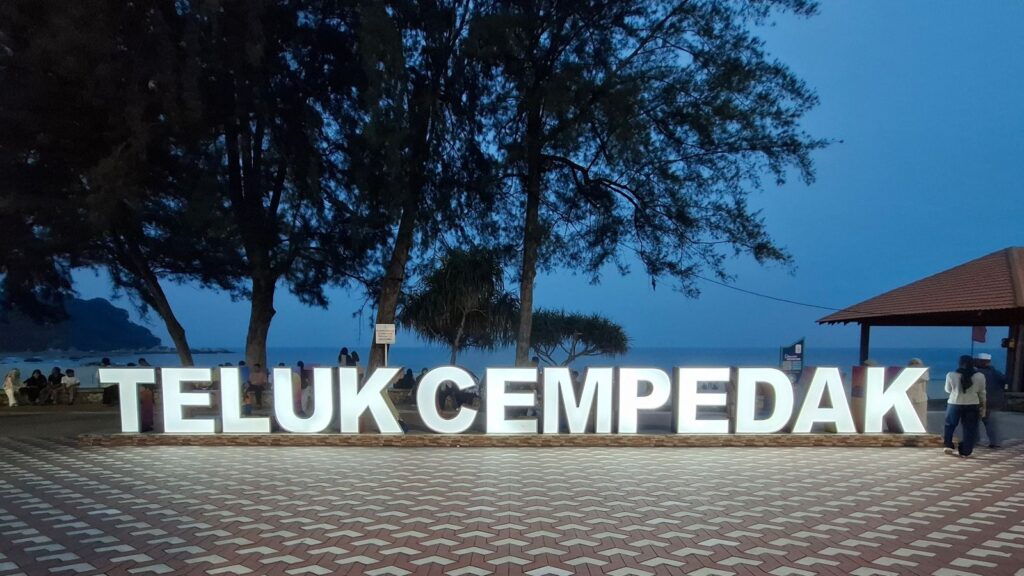
It was a lovely beach, and exactly our kind of place. An evening stroll somewhere like this is what we enjoy most. We could happily have spent another day on that sand, and another evening wandering.
But we were leaving the next day. Kuantan had barely had a chance.
Kindness, 80 Sen at a Time
The next morning, on our way out of town, we stopped at Kuantan’s state mosque. Its striking white minarets and bright blue dome caught our attention.
But before we could go inside, there was the small matter of paying for parking. Simple enough, you’d think. The local parking app had other ideas. After several failed attempts, Karen asked the staff in a nearby shop for help. They didn’t just explain the system. They paid the fee for us.
All 80 sen.
Naturally, we paid them back. But nobody had to help two baffled tourists, and nobody expected anything in return. They simply helped.
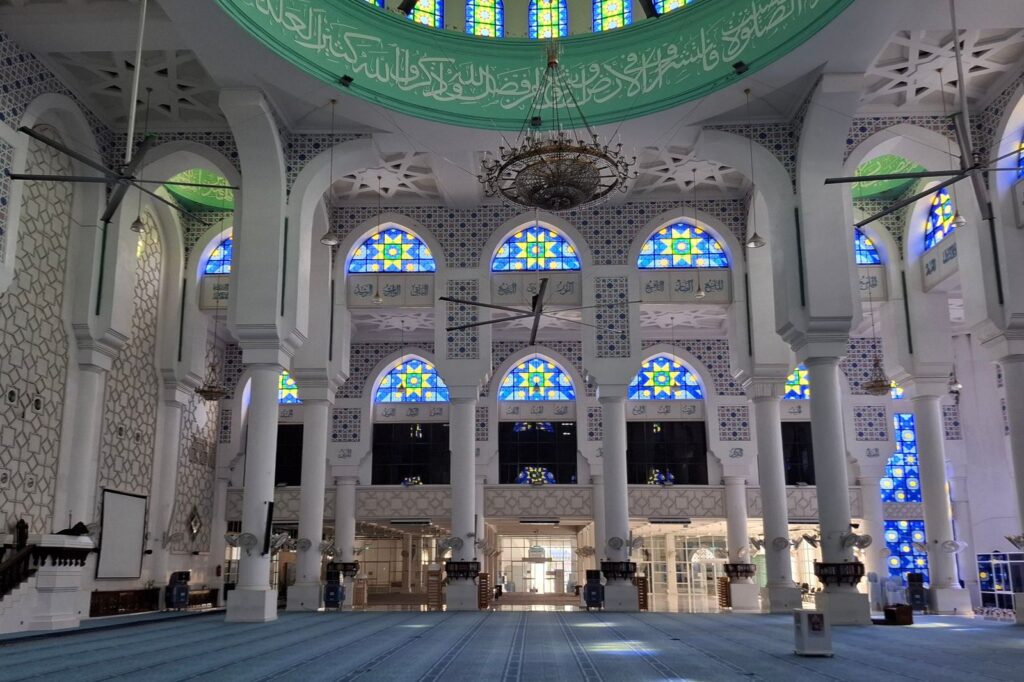
When we finally made it inside, a vast green dome floated overhead. It was ringed with flowing calligraphy and stained glass. A sea of blue carpet stretched below.
We found the same warmth throughout our journey. At petrol stations, strangers stopped to chat and offer help. Restaurant staff greeted us like regulars. Small gestures never make the travel brochures, yet they tell you more than any landmark.
They more than made up for the frustrations behind the wheel.
Malacca: The Star of the Show
Malacca was a revelation.
The Portuguese seized it in 1511. The Dutch took it in 1641, and the British followed. Today, Malay, Chinese, Portuguese, Dutch and British influences all jostle for space along its streets.
We spent three nights there. It wasn’t enough.
For once, we treated ourselves. We stayed at The Lisbon Melaka in the Portuguese Quarter. Its street is named after Afonso de Albuquerque, the commander who led that 1511 conquest.
The hotel is a grand, whitewashed colonial-style building, with cannons guarding the front and rear. Shady colonnades open onto a huge, glittering pool that glows electric blue after dark. The staff were excellent. It cost more than we’d usually spend, and it was worth every ringgit.
The Portuguese Quarter itself is small. There are Portuguese street names and a handful of “Portuguese” cafés and restaurants. We found the Portuguese flavour less evident here than we’d expected.
Malacca has one significant challenge. The heat. It was hot. Very hot.
So we built our days around it. Mornings and early evenings were for exploring. Afternoons were for blobbing out by the pool. Holidays shouldn’t become endurance tests.
We climbed St Paul’s Hill to the ruined church at its summit. Below it, we explored the crumbling gateway of A Famosa. Down in Dutch Square, Christ Church and its neighbours blaze red in the sun.
Decorated trishaws circled the square, blaring music and dripping with plastic flowers. We gave them a miss. They felt hopelessly contrived.
Egg Tarts, Satay and Dragon’s Beard
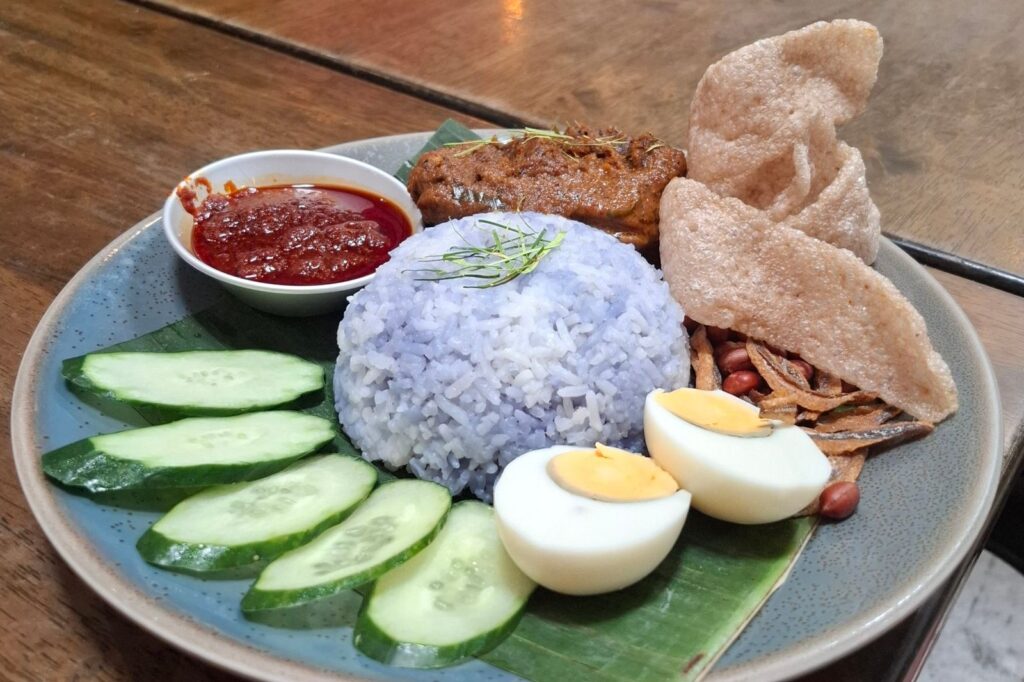
Breakfast at Maréca became a highlight. The bakery is known for its Portuguese egg tarts, but I couldn’t resist the nasi lemak. The rice came a vivid blue, with spiced chicken, boiled egg, cucumber and fiery sambal. It was served on a banana leaf. Alongside came cendol, layered with red beans and crowned with a pandan leaf. Both were wonderful.
We went back the next day for the egg tarts. Too late. There were none left.
Jonker Street presented our most enjoyable problem of the day. Malay, Chinese and other culinary influences competed for our attention. Every few steps, another stall offered something we fancied. Choosing what to eat was half the fun.
Making dragon’s beard candy was quite a performance. We watched a stallholder stretch sugar into threads as fine as hair. The finished candy was deliciously moreish. Karen chose fruit on a stick, coated in glossy caramelised sugar.
At The Geographer, we finally finished a plate of satay, washed down with cocktails. This time, nobody had to run for cover. The local bars were good too, and a cold beer was never far away.
Life Along the River
Our evenings belonged to the river. Walking along the bank one day, we noticed something large swimming lazily beside us. It was a monitor lizard, looking every inch a dinosaur.
We took to the water twice. The first trip set off in the early evening. The second came after dark, and Malacca put on a show.
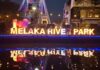
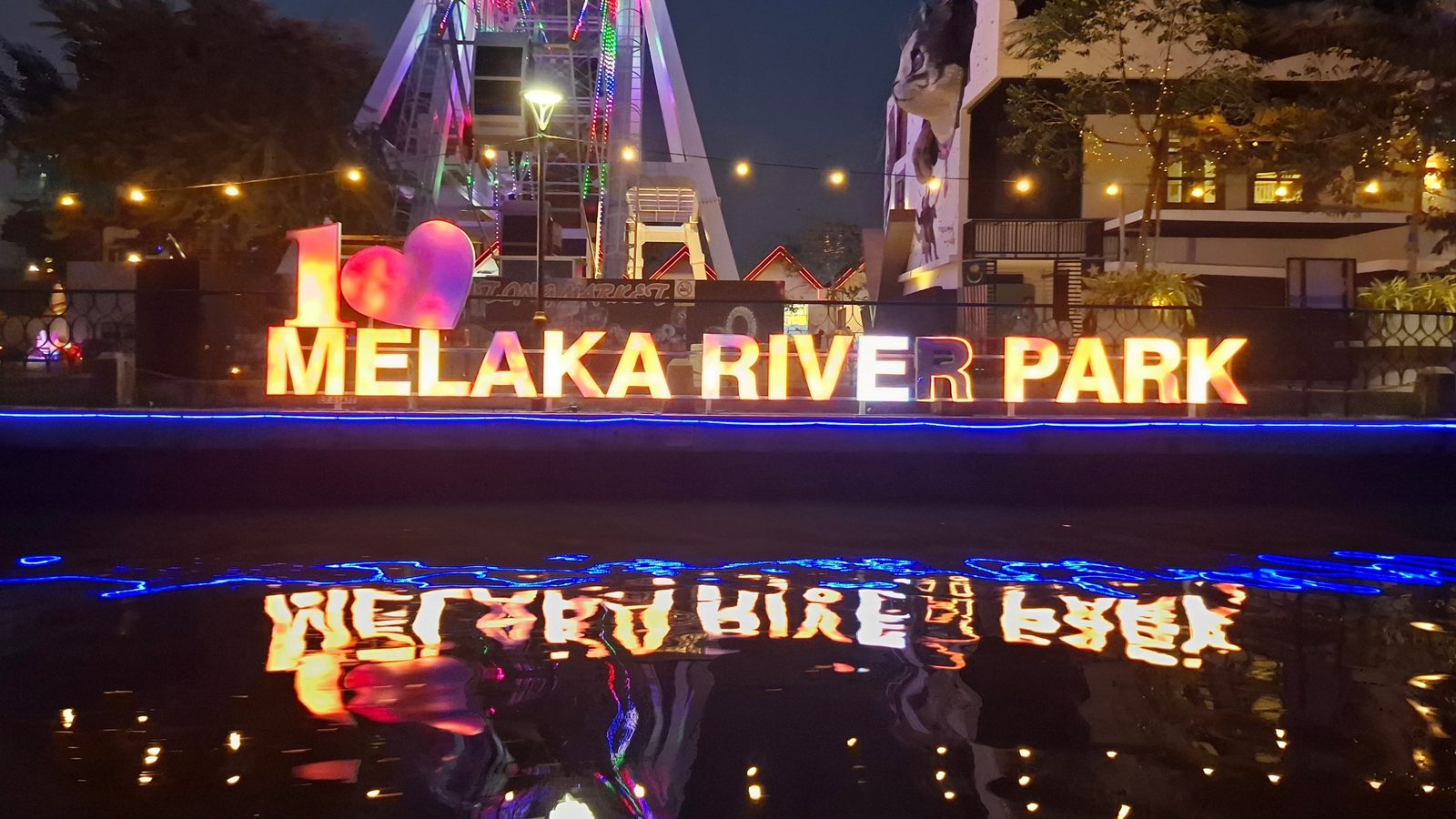
Bridges blazed with neon in pink, purple and green. Coloured light rippled across the water. Old shophouses, palm trees and a Ferris wheel slid past in a blur of colour. It was gloriously over the top.
Malacca never felt like somewhere we needed to conquer. It felt like somewhere we wanted to stay.
Some destinations impress you. Others make you wish you’d booked another night.
Malacca did both.
Port Dickson: When the Weather Takes Charge
Our final leg was meant to be a gentle one. A beach stop on the way, then a night by the sea at Port Dickson.
Malaysia’s weather had other ambitions. Torrential rain chased us for most of the journey. The wipers thrashed and the road ran with water. The palm trees dripped under a sullen grey sky.
We’d planned to stop at Pantai Pengkalan Balak. Through the rain-streaked windscreen, it looked like a lovely beach. We’ll have to take that on trust. We gave it up and drove on.
Port Dickson was worse. In fairness, it had an impossible act to follow. After three nights in Malacca, almost anywhere would have struggled. We stopped for a coffee, took one look around and made a swift decision. No.
It was so uninspiring that neither of us took a single photo. For two people who photograph everything, that says it all.
Luckily, our hotel booking was only a reservation, so we simply cancelled. We finished our coffee and pointed the car inland.
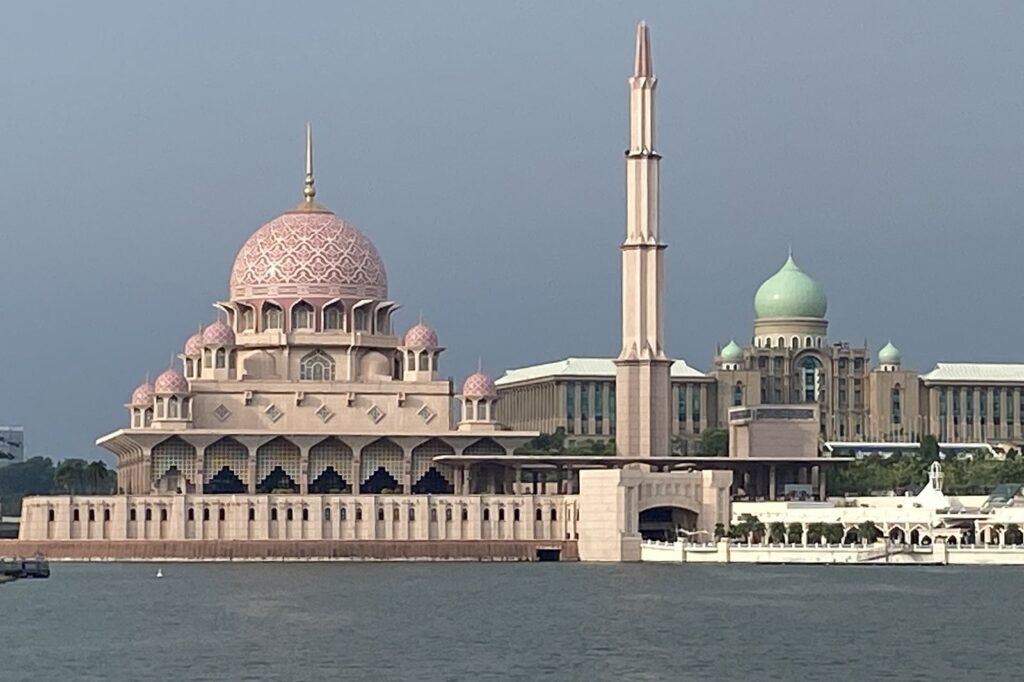
Fortunately, we had a fallback: Putrajaya, where our road trip had begun. We checked back into the same hotel we’d left at the start. After a day like that, familiar sounded wonderful.
By late afternoon, we’d swapped windscreen wipers for a gentle cruise on the lake. Our coastal finale had washed out completely. Yet somehow, we’d rescued a lovely afternoon.
We’d come full circle.
Would I Do This Malaysia Road Trip Again?
Absolutely. But I’d plan the driving very differently.
Karen and I both felt we’d spent far too long behind the wheel. Those long hauls ate hours we could have spent in places that deserved more time.
Kuantan immediately springs to mind. We found Teluk Cempedak on our only evening there, and we’ll never stop kicking ourselves.
Next time, I’d fly from Kuala Lumpur to Kuala Terengganu or Kuantan. Then I’d hire a car locally. The time saved alone makes it worth considering.
A car certainly gave us freedom. In Malacca, though, Grab made getting around easy. We barely needed our own wheels there. They did carry us through the deluge back to Putrajaya, though.
Looking back, the frustrations feel minor beside the discoveries. Monkeys, a snake, batik and a lime-soda sundowner in Cherating. A glass floor and hard-won beer in Kuala Terengganu. Murals and an evening beach in Kuantan. And Malacca, now one of my favourite places anywhere. Everywhere we went, the Malaysian people won us over with their warmth.
We’ll be back, starting with Malacca. Next time, I’d spend fewer hours watching traffic cones. And more time enjoying Malaysia.