Originally published 18 November 2024 · Updated 3 November 2026
We’d rafted the gentle Tongariro and survived the Shotover’s Grade IV and V rapids. Yet somehow, Fiji’s Upper Navua kept slipping to next time.
Rivers Fiji assured us that the Upper Navua offered a gentler adventure, with mostly Grade 2 rapids. Quite different from the Shotover’s formidable rapids.
We decided it was time to take the plunge. Would it prove worth the wait?
Our companions included an American couple, a Danish mother and son, and a Fijian girl connected to them. Together, the seven of us experienced a day none of us would soon forget.
Second Gear All the Way
A Rivers Fiji minibus collects us from our Pacific Harbour resort for the 75-minute journey inland.
Our four-wheel-drive minibus roars and shudders in second gear along the uneven tracks. Loose stones ricochet against the chassis as we negotiate the rocky track.
We climb narrow gravel roads, leaving the familiar coastal scenery far behind. Around each bend, Fiji reveals another side of itself, increasingly remote and wonderfully unfamiliar.
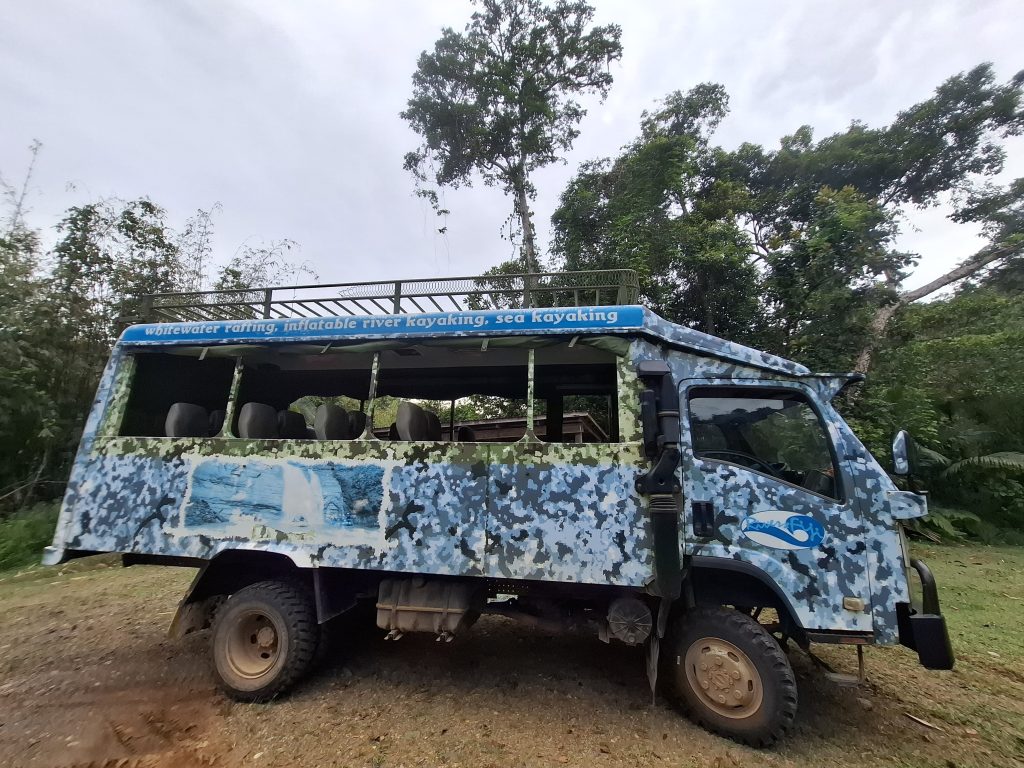
By the time we reach base camp, our comfortable resort feels a long way behind us. Moses distributes lifejackets, helmets and paddles, preparing us for our first encounter with the river.
A ten-minute walk through the rainforest takes us towards the river. The sound of rushing water grows louder with every step, heightening our anticipation.
The promise of a soaking awaits us.
The Captains of Our Journey
Leading us are three guides: Peter, Abraham, and Moses. With names like those, we figured we were in reasonably safe hands.
Moses takes charge of the American couple, while Abraham offers one final warning, delivered with a mischievous grin.
“No crocodiles or snakes here, just the latest cameras and phones the river claims every year!”
Peter, our guide and resident fisherman, settles at the helm, handling two long paddles with practised ease. His quiet confidence suggests he knows every bend in this river.
He runs through the safety instructions and gives us a brief paddling lesson. We plonk our backsides on the raft’s edge and push off into the river.
We glide effortlessly through the first gentle rapids, with four hours of adventure still ahead.
Forty Metres of Cliff
The Upper Navua River is no ordinary waterway.
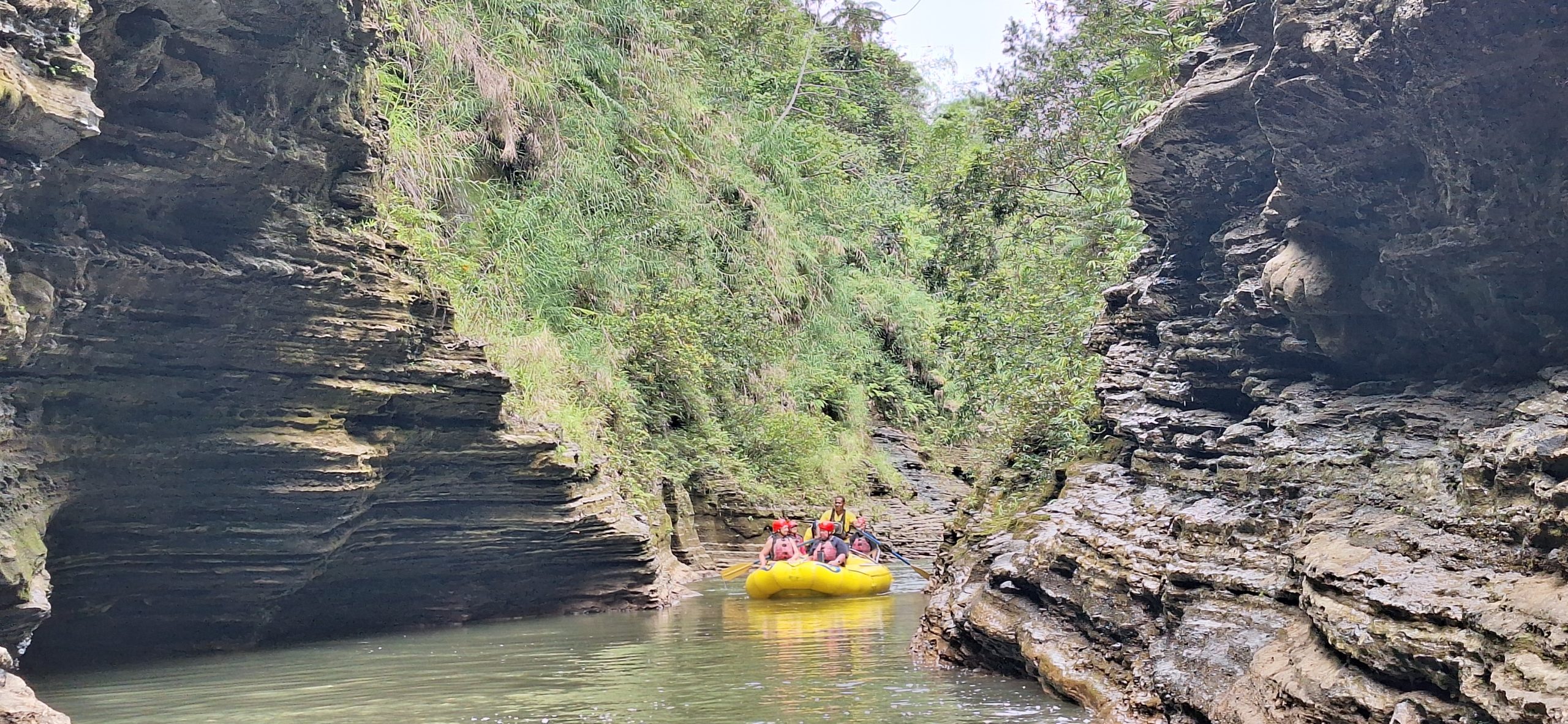
The river winds through volcanic gorges, with sheer cliffs rising more than 40 metres above us. Within this extraordinary corridor, the outside world seems to disappear.
Sunlight filters into the gorge, catching the surface of the moving water. The current carries us deeper into the gorge as the first rapid grows louder between the cliffs.
The rapids prove manageable, although there’s still enough excitement to keep us alert. Between the rapids, the river opens into peaceful pools, reflecting the canyon walls and morning sky. For a few moments, everything feels wonderfully still.
Peter makes the steering look effortless. He guides the raft around rocks and through narrow passages with quiet precision. Above us, the canyon walls form towering natural arches.
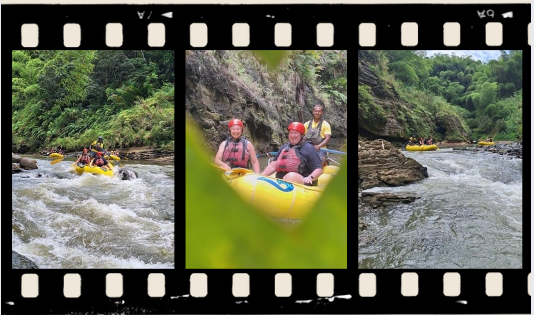
Our journey covers approximately 24 kilometres, revealing a side of Fiji many visitors never experience. During quieter stretches, our guides explain the local ecosystem while we watch for wildlife along the riverbanks.
Seventy Waterfalls and a Fiji Massage
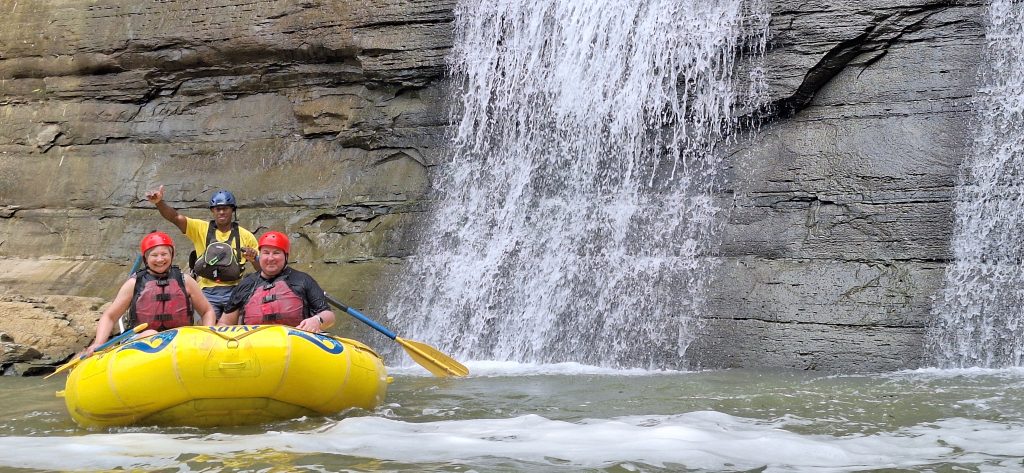
Peter tells us that around seventy waterfalls cascade down the surrounding cliffs. Some trickle gently over moss-covered rocks. Others thunder down the cliffs, filling the gorge with the sound of falling water.
Massive boulders, smoothed by centuries of flowing water, line the riverbanks. Lush ferns and moss cling to canyon walls.
We drift with the current. The gorge narrows until the towering cliffs leave just five metres of sky visible above us. Shafts of sunlight penetrate the narrow opening, briefly illuminating the rock walls.
Peter tells us the water is relatively low.
“In wet season, this place doubles in volume”.
We stop beside a waterfall for what our guides enthusiastically call the “Fiji massage”. One by one, we tip-toe beneath the falling water. We laugh and shriek as the icy water pounds our shoulders. It’s certainly an invigorating massage!
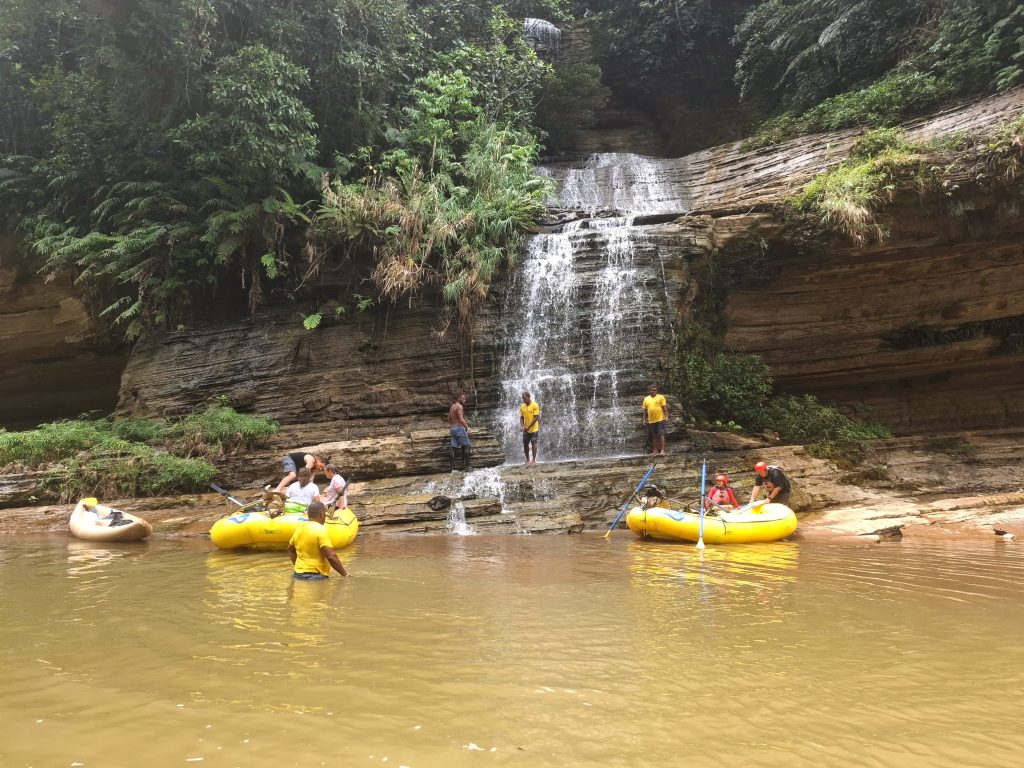
Every bend reveals something different.
The towering canyon walls give way to rolling farmland. Horses and cattle graze peacefully along the riverbanks, seemingly indifferent to our passing.
The river also plays an important role in the lives of nearby communities. We see villagers fishing and harvesting cassava, while women gather leafy greens from the forest. Dense bamboo and tapioca plants crowd the riverbanks, adding to the lush tropical scenery.
We navigate a tangle of palm fronds that has formed a natural barrier across the water. A dead palm hangs across our path. We duck beneath it and continue downstream.
The People Who Made the Journey
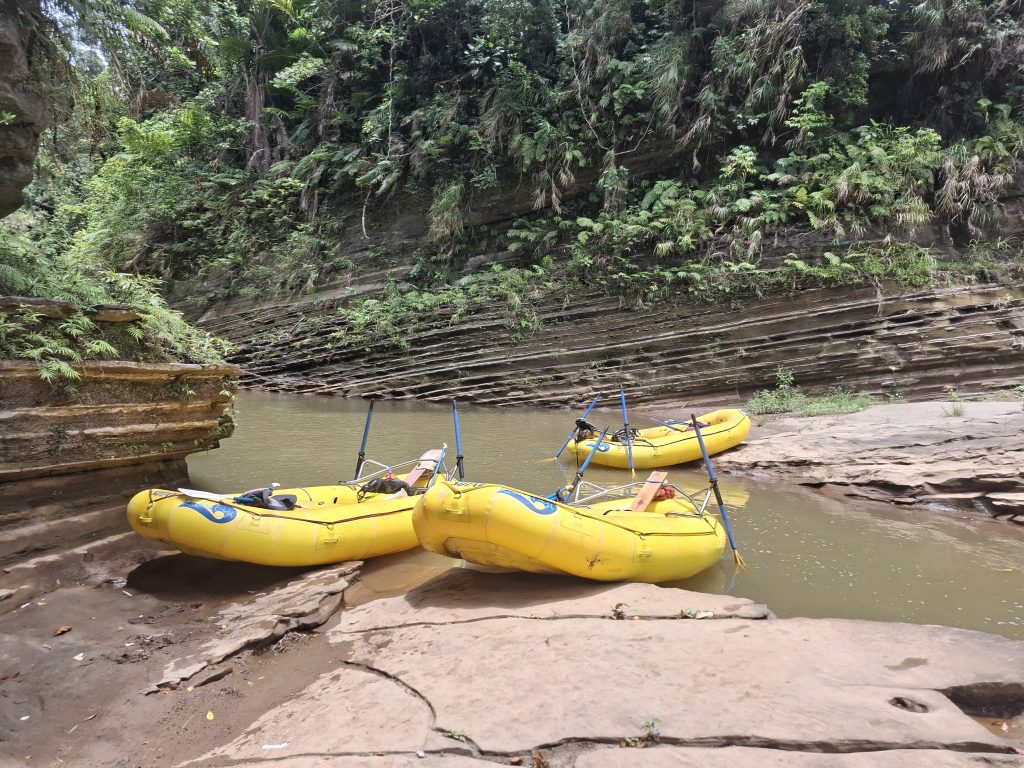
Midway through our journey, we stop beside the canyon for lunch.
Peter casually catches two fish using little more than a string, hook and piece of bread. Lunch consists of chicken and tuna salad rolls, fresh pineapple and papaya.
The scenery may be spectacular, but the people make this journey memorable.
The American couple greet every rapid with infectious enthusiasm. The Danish mother and son seem to find something to laugh about around every bend. Our Fijian companion brings a local perspective to the experience, discovering unfamiliar aspects of her own country.
Even familiar places can surprise us when we experience them differently.
Why the Upper Navua Matters
Fortunately, much of this remarkable river corridor enjoys formal protection.
One of the journey’s most compelling aspects is the conservation work connected to its tourism operations. The river passes through the Upper Navua Conservation Area, an important protected corridor.
Rivers Fiji, local landowners and conservation groups collaborate to protect the area. The initiative has helped protect a 16-kilometre stretch from logging, gravel extraction and other damaging activities. The area holds Ramsar designation, recognising its international importance as a wetland.
Our rafting adventure also introduces us to the importance of protecting this fragile environment. Responsible tourism can support conservation while creating employment opportunities for nearby communities.
Peter explains that villagers once transported vegetables downstream on bamboo rafts to sell at local markets. They would then return home on horseback. Today, wooden longboats powered by small outboard motors make the journey easier.
We wave to two men fishing in the river, their washing spread across nearby rocks to dry. It’s another reminder of how closely everyday life remains connected to the river.
Planning Your Upper Navua River Rafting Adventure
When to Go
Fiji’s dry season generally runs from May to October, offering more predictable weather for outdoor adventures. Water levels may be lower, although actual rafting conditions depend on rainfall and the river’s flow.
What to Bring
Wear comfortable clothing that dries quickly. Water shoes with good grip and suitable sun protection are also worth bringing. Bring sunscreen and consider a waterproof camera, although remember Abraham’s warning about expensive electronics!
During our visit, Rivers Fiji offered more than 100 professional photographs for FJD 40.
Is Upper Navua River Rafting Suitable for Beginners?
You don’t need to be an experienced rafter to enjoy the Upper Navua. We found the Grade 2 rapids exciting without being intimidating.
Our guides provided clear instructions and handled the river with reassuring confidence. Check Rivers Fiji’s current age, fitness and safety requirements before booking.
Fancy something wilder? Read how the Shotover had us screaming for our mummies. Or start a little more gently, as we did, on the Tongariro.
Stay Inspired
For more travel stories, unexpected discoveries and occasional mishaps, follow The Travel Dude on Instagram.
Beyond Fiji’s Beaches
The Upper Navua gave us far more than the gentle rafting adventure we’d anticipated.
We discovered extraordinary landscapes, met memorable people and experienced another side of Fiji. Knowing that conservation efforts help protect this remarkable place made the experience even more meaningful.
Fiji’s turquoise seas and white beaches may attract the visitors, but its green interior deserves equal attention. For us, the Upper Navua revealed something entirely different. The towering cliffs, waterfalls and peaceful pools left an impression that has stayed with us.
Would I recommend the experience? Absolutely, especially to travellers curious about Fiji beyond the beaches.
And if you’re offered a “Fiji massage”, don’t expect anything remotely relaxing!